
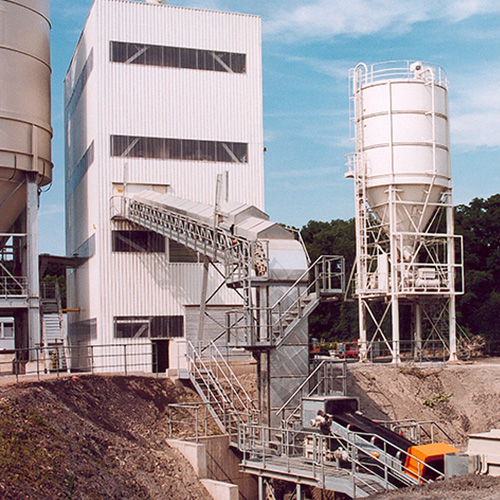
Drying Technology
Application
The processing of minerals entails a number of procedural steps; such as crushing, sizing, classifying, and at times the need for drying. In itself, removing moisture from a given material is relatively basic; just introduce hot air. Although this can be calculated with a high level of accuracy, the drying step presents its own unique and sometimes difficult challenges; high diversity in the raw materials, changing material characteristics during the drying process and the true amount of time that is needed in order achieve our desired goal. Achieving the optimum solution takes know-how, years of proven experience and the correct equipment technology. With that in mind; HAZEMAG delivers solutions!
The decision to dry material or alternatively dry and grind material is driven by the final product goal; what is truly needed? Each industry presents a potential need and opportunity for drying technology. For example:
- Cement: clay, trass, chalk, pozzolana, opoka, blast-furnace slag, marl
- Gypsum: FGD gypsum, chemical gypsum, anhydrite
- Ceramic: clay, kaolin, bentonite
- Building/Construction: flue ash, sand
- Chemical: aluminium hydroxide, fluorite, tricalcium phospate filter cake, dicalcium phosphate filter cake, chrome hydroxide filter cake, nickel carbonate filter cake, chrome ore
- Steel: cinc mud, blast-furnace slag, iron ore concentrate
- Lime: limestone, dolomite, gypsum
In this case, the drying process should be understood as the thermal removal of water from the wet material; achieved by convection. In this case, water is evaporated when the hot gas / hot air comes into contact with the wet material. The hot air is normally produced by the flue gases coming from a hot gas generator; however in many cases this can be facilitated by the use of available, on site exhaust gases. The fuel source for the gas generator is normally supplied by natural gas, heating oil or coal fines (dust).
 WhatsApp us